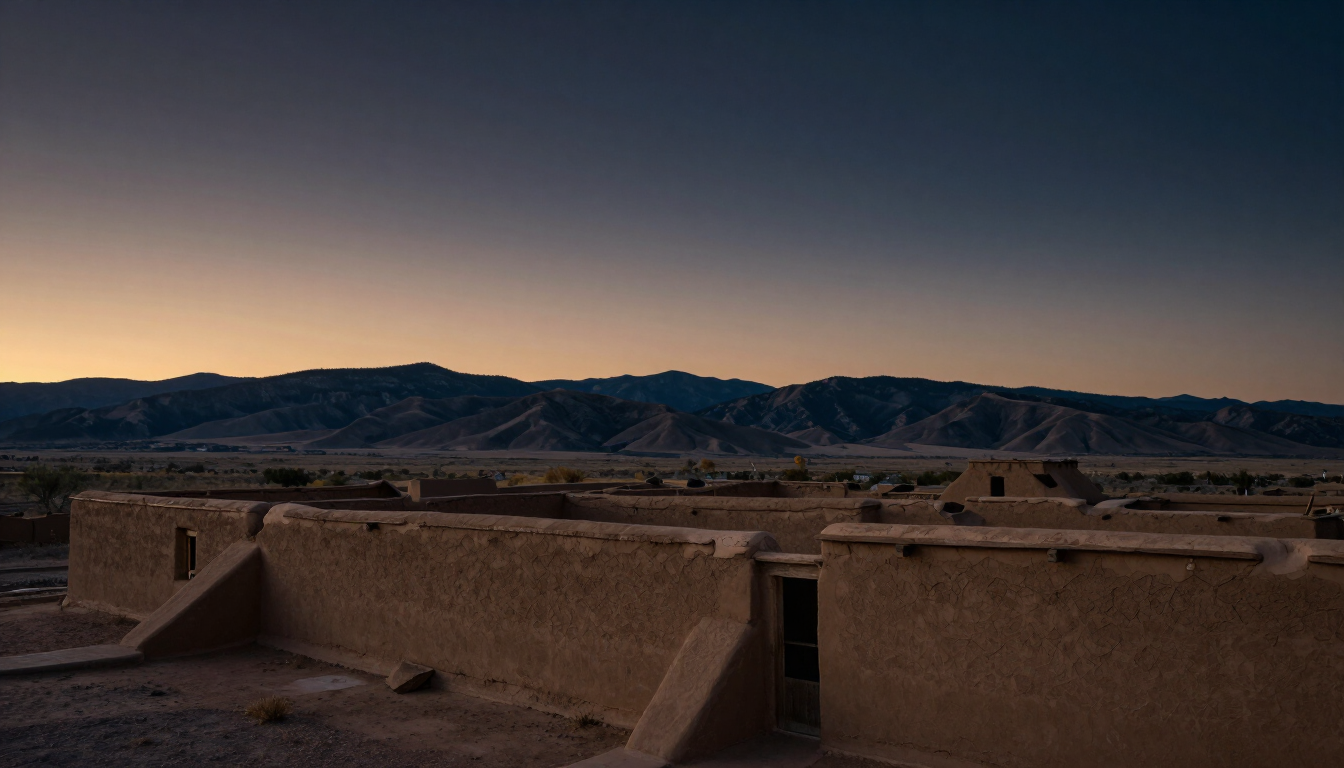
Every month · Embudo valley
This is not a retreat.
It is a revival.
You will rise before dawn, work alongside eleven other people, and leave with your own readings — before and after, yours to keep. Most people never find out whether it changed them. That is what the instruments are for.
- Three days from $1,200
- Ten days from $3,600
- Dixon, New Mexico
- Twelve people minimum
What this is
This is consciousness taught the way physics teaches anything: a grammar, an act, a measurement — and only what survives the measurement is kept. Each lesson takes something involuntary — the breath, the alarm, other people, sleep, the dark — and makes it practiced. The sessions change what you believe is possible; the lessons change what you can do; the strap keeps both honest.
Ten days in a high desert village in northern New Mexico. You sit twice a day in a room with other people and a set of bowls. While you sit, a strap on your chest and a band on your head read three numbers off you, and across the ten days you watch them move. The instruments go home with you.
That is the whole of it. Everything below is why it works.
The frame
What can be received,
and what can be shown.
The practice is what can be received. The numbers, the blood, the page in their own handwriting — that is what can be shown.
Everything here is built around that distinction.
There is a name for the equation this place runs on, and it is a plain one. Mass is what has not let go yet. All mass, everywhere, is the same quantity of holding — a star, a stone, a body, a grief. The practice is the release, the instruments are how you check whether it happened, and the week is what it looks like from outside.
Mass is what has not let go yet. That includes yours.
Release
One instruction. Twenty-two ways of practicing it.
Every hard instruction any tradition ever gave is the same instruction. Die before you die. Lose the life to find it. Let the grain of wheat fall into the ground. Empty yourself. Sell what you have. They are not twelve teachings. They are one, said twelve ways by people who could not say why it worked.
Here is why. There is a term in the equation for how tightly a thing holds onto itself — the self-coupling. When it is high, what would have been flow becomes a closed loop: energy circulating inside the system instead of moving through it. Release that term and the channel opens. Nothing is added. The flow was already running. The grip was withholding it.
So the practice here is not construction. Nobody is building anything in you and there is nothing to acquire. Twenty-two practices, and every one is a different handle on the same single act of letting go of the holding.
And the same term is the mass — the quantity that measures how hard a thing grips itself is the quantity that gives it weight. Which is why the accounts of a body becoming lighter and the instruction to die before you die are not two subjects. They are one equation, written twice, by people who had the practice and no way to measure it.
Perfect love casts out fear, and fear is the name for the grip.
Nothing is being added to you. The grip is what goes.
One more thing before the list, because otherwise the list reads wrong. The sitting, the sound, the strap, the headsets, the microscope, the water and the equations are not seven things we offer. They are one thing, looked at from seven sides. There is a single quantity underneath all of it — how completely something is acting as one thing rather than as a crowd — and every instrument in this house is a different way of getting a number out of it. The strap reads it in one nervous system. The headsets read it between twelve. The microscope reads it in blood. The water reads it in something that is not you at all. The practice is how you move it. The equations are where the quantity came from. So there is nothing here to pick from. You do not choose the sound session over the morning work any more than you choose the thermometer over the kettle. A week here is one measurement of one thing, taken seven ways, on you.
Who this is for
There is a page about who should not come, and it is long.
This is the shorter list.
You have a practice and it has flattened. Somewhere around month three, or year three, it stopped going anywhere and you concluded you were not built for it. You were built for it. You built on the part that was easy to build on.
Or you have paid for this before. A retreat, a course, a healer, a program with a number on the end of it. Something happened, and then it did not survive the drive home, and nobody ever showed you a reading.
Or your body made the decision for you and you did not arrive here out of curiosity.
In all three cases the same thing is true, and it is the only requirement there is: you would rather know than believe. If somebody told you it was working, you would want to see the number. That is who this is for.
If none of that is you, the practice here is free and the books are free, and you can find out for nothing.
The river
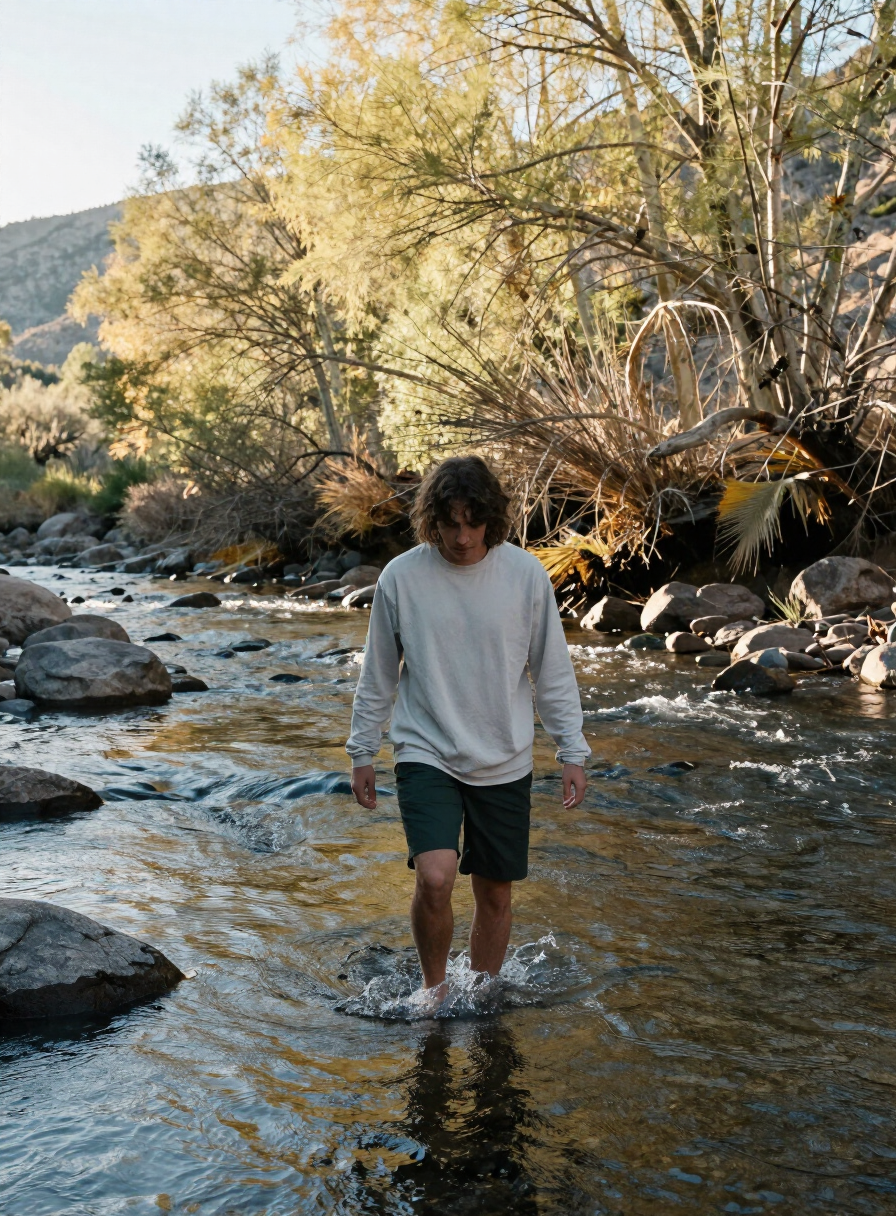
Cold, available. Everyone expected.
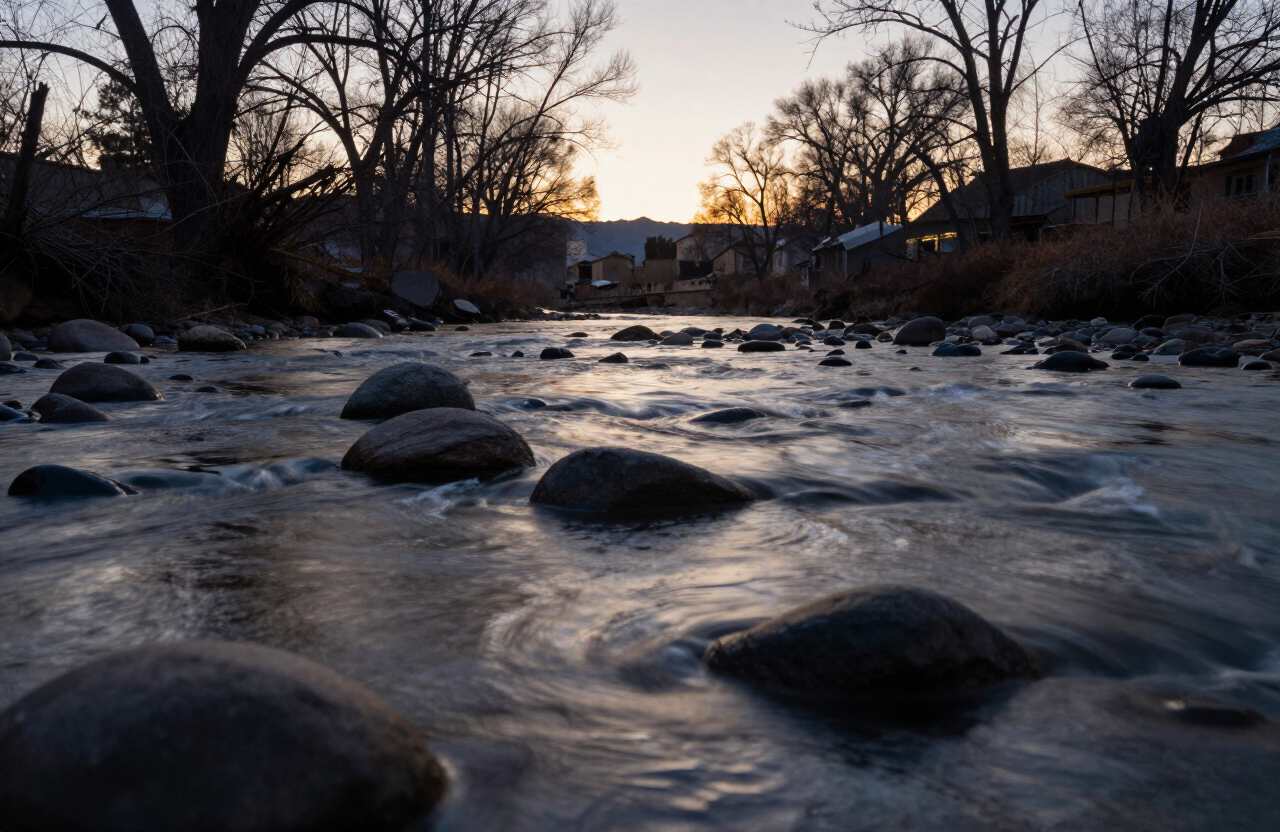
The Embudo River runs cold through the property, thirty seconds from your room. It is part of the day — about eleven, before the meal — not a personal scheduling choice. Nobody is put in cold water against their judgment. Some people cannot, for medical reasons we screen for. Some are not ready on day one and are by day four. Cold water is well studied and does not need overselling. It is there, it is cold, and a reading is taken before and after like everything else here. The river was here before any of this and will be here after. It does not care whether you get in.
The sequence
A week here has a shape, and the shape is old. The people who first wrote it down were working on metal, and they had four words for the whole of it: the material, the vessel, the operation, and the assay. It is the same four here, with one difference that matters. In metallurgy the material sits still and the operation is done to it. Here they are not separable. You are not the material being worked on — you are the working, and the week is what it looks like from outside.
01
Hour one
The assay before anything. Your first reading, taken before you have been taught a thing, so that whatever happens afterward has something to be measured against.
02
Day one
The gap between before and after a single sitting.
03
Day three
The morning you stop being twelve people and start being one.
04
Day forty
Whether it held.
The vessel is the house and the eleven other people in it. The operation is the work, the cold, the sitting and the sound. The assay is the strap, the blood, and the page in your own handwriting. None of that is a figure of speech laid over the week. It is the week, described in the oldest words there are for it — and the one thing those words insist on, which the laboratories forgot for four centuries, is that the state of the person doing the work is part of the work.
A word about the word, because it carries a lot for some people and nothing for others. Revival here means what it says: bringing something back to life. What is being brought back is a measurable quantity, and it has a number, and you take that number home. There is no altar and there is nobody to convert you.
You will meet a lot of Christian material this week, and you should know why. The Essenes wrote down a daily practice in more detail than almost anyone in the ancient world, Josephus described them from outside, and the Gospel accounts preserve descriptions of what happens to a body at high coherence that nobody at the time had the instruments to check. That is a record, and it is the most complete Western one we have. We treat it the way we treat the Sufi material on grace, the Hebrew letters, and the twenty-two intervals Indian musicians arrived at by ear — as people paying very close attention, for a very long time, without the equipment.
So you do not have to believe any of it, and you will not be asked to. A Christian will find their own tradition treated seriously and not flattered. A Muslim will find the same. A Buddhist will find practices they already know, with a chest strap on. An atheist will find that every claim here is written as an equation with a way to be wrong, which is the only reason any of it is worth your week.
Come as whatever you are. The river is the same temperature for all of you.
The work
"I was clearing the acequia when I understood that I was the blocked channel."
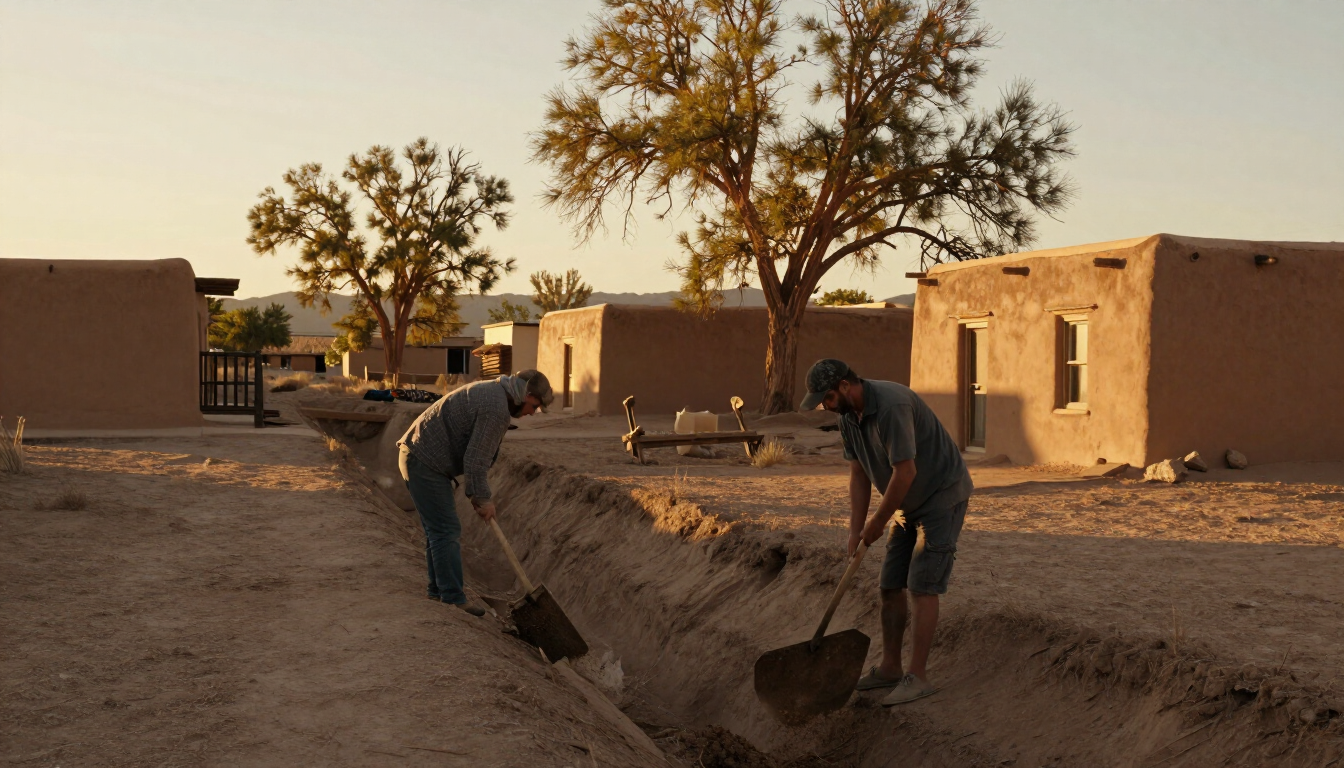
Everyone rises before dawn. Everyone works about four hours. The ditch has been cleaned this way, by everyone who drinks from it, for four hundred years.
Everyone rises before dawn. Everyone works about four hours. The ditch has been cleaned this way, by everyone who drinks from it, for four hundred years. You cannot become a unit by sitting quietly beside strangers. You become one working next to them before the sun is up, when nobody is being charming and nobody has anything to prove yet. The whole industry sells rest, and anyone who has done two of those retreats knows the feeling wears off on the drive home — because rest does not produce phase alignment. The work is real. Dixon is acequia country: communal irrigation ditches, run by an association, cleaned every spring by everyone who draws water from them. Nobody here is doing invented chores. You are joining something that was running before you arrived and will be running after you leave. It is not payment and it is not a test, and nobody is watching to see whether you are enjoying it. The acequia does not know you are at a revival. That is precisely why it works.
Three channels
The work sends something out. The bowls bring something in.
The voice does both, and it is the only one that does.
The morning work. Effort out, into something that is not yours and will be there after you leave.
Lying down while something is done to you and doing nothing about it. Harder than it sounds, and a skill rather than a rest. The bowls are how it is practiced.
When you hum, you are the source of the vibration and you are inside it in the same moment. It reaches you through your own bones before it reaches anyone else through the air. You cannot hum without receiving your own hum.
The work sends something out. The bowls bring something in. The voice does both, and it is the only one that does. Giving is the morning work — effort out, into something that is not yours and will be there after you leave. Receiving is lying down while something is done to you and doing nothing about it. Harder than it sounds, and a skill rather than a rest. The bowls are how it is practiced. Both at once is the voice. When you hum you are the source of the vibration and you are inside it in the same moment; it reaches you through your own bones before it reaches anyone else through the air. You cannot hum without receiving your own hum. That is why every tradition that ever set out to change a person put a voiced practice at the center — the chant, the name repeated, the letter on one breath, the psalm. It is the only place both halves run in the same breath, and it is available to anyone with a voice, sitting anywhere, for nothing. So the twenty-two are not silent practices with a sound attached. Each has a letter, each letter has a sound, and the sound is made aloud on the out-breath. The vocal part is the practice. People make sound together here every day; it is central, not offered.
Why the week is shaped this way
Nobody who built one of these traditions started
where you want to start.
The Essenes did not open with visualization. John the Baptist did not begin by finding a quiet corner. Jesus did not prepare for anything by sitting comfortably. They started with cold water, hunger, silence, physical labor, and getting up before it was light. The reason is not aesthetic and it is not masochism. A body that has never been asked for anything will not hold a state. You can prove it tonight: sit for twenty minutes after a day with no movement, no hunger, no cold and nothing difficult. What you meet in there is a system that has never been asked for anything, and it will not settle — because settling is a skill and it has not been practiced. This is the part everybody skips, and it is why most people's practice plateaus around month three and they conclude they are not built for it. They are built for it. They built on the part that was easy to build on. Rising before light. Your body has a clock, and waking before it is a choice. That choice is where will begins. Face east and stand until first light — nothing else, and nothing before it. The cold. Thirty seconds is enough to count. Cold on the skin drives noradrenaline up two to three hundred percent and it stays up for hours, and then the vagal brake comes on harder than it was before. What you are training is not the cold. It is the recovery, and a nervous system that has practiced going up and coming back down comes down faster from everything else. And the plainest reason: you cannot think about your day while the water is that cold. Whatever you carried in does not survive the first ten seconds.
Why twelve
Coherence adds two different ways.
Which one you get depends on whether the people are in phase.
A woman in a crowd touches the edge of a cloak. The account does not say he decided to heal her. It says he perceived that power had gone out of him. Felt by the source, activated by her state, through cloth, in a crowd — somebody with no instruments describing coupling between two nervous systems, and getting it right. Most people reading have their own version. You have given something to someone in real need and felt it leave — not money, not time, a quality of attention you could feel depleting. And you have walked away from a conversation lighter than you arrived. That transfer is real, it has a direction, and it can be measured. This place is built on one question: what happens when twelve people who can do that are in the same room, in phase, at the same time. Out of phase, twelve people give you twelve. In phase, they give you a hundred and forty-four. Dicke proved it for atoms in 1954 and called it superradiance — the same mathematics, because it is the same question about whether things are in phase. Which is why the work is in the week. Twelve strangers in a row are twelve sources out of phase. Twelve people who have cleared a ditch together before dawn for three days are much closer to one. The formation is the phase alignment, and the shared meals and the same hour and the same breath rate are all doing that one job.
The number
- Out of phase
- 12×
- Random addition — 12 walkers
- In phase
- 144×
- Superradiance — N² not N
Dicke, 1954. The same mathematics applies because it is the same question about whether things are in phase. Small enough that phase alignment is achievable in days rather than weeks. Large enough that the difference between adding and multiplying is worth having. And twelve in phase gives 144, which is not a coincidence dressed up — it is the number already in the structure: twelve stations, twelve recognitions, 144 ordered pairs between them. The cohort size and the geometry are the same number. That is why twelve is the floor and the house is the ceiling. More than twelve is better. Fewer does not work properly. The morning you stop being twelve people and start being one is not a feeling. It is a number, and we take it.
The table
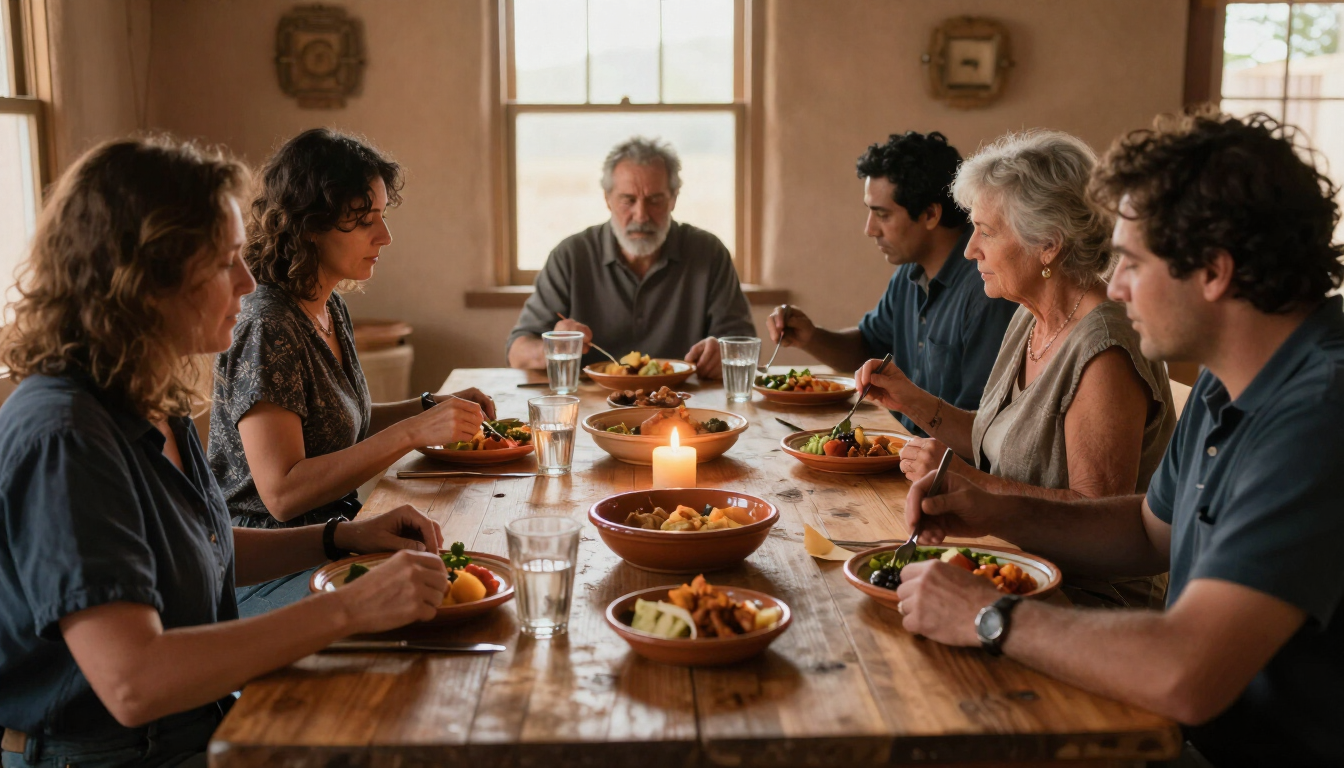
Meals cooked here.
Eaten together, every day.
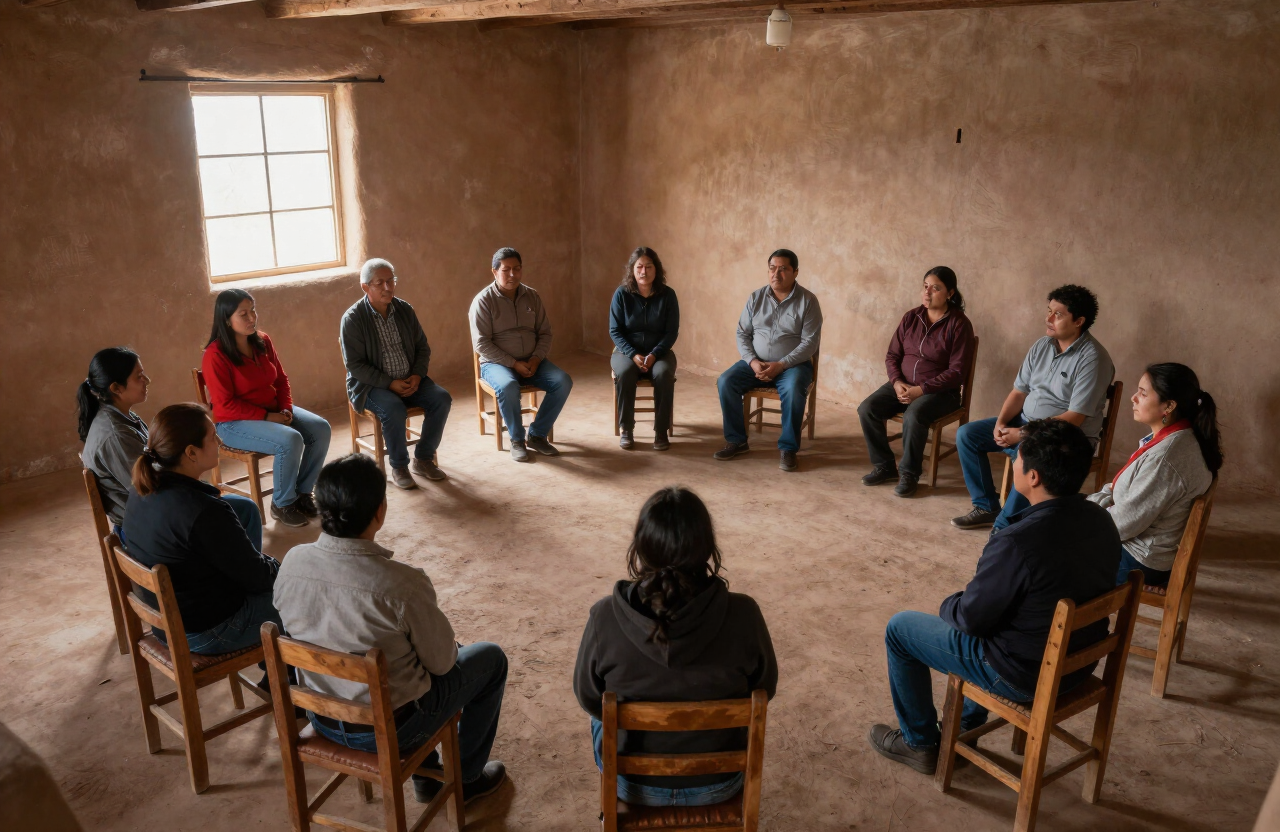
On site, at a table, twice a day. Dietary needs handled without ceremony — tell us and it is dealt with. Eating together is the third thing that makes people into one, after the work and the sitting. It is the oldest version of what this place does, and it needs no explaining to anyone who has ever cooked for someone they were trying to reach. It is in the price. Nothing to arrange, nothing to spend. You show up, you work, you eat.
“Pure now themselves, they repair to the refectory as to some sacred shrine.”
Not a description of a dining room. A description of how they walked into one.
Josephus, The Jewish War
The instrument
Three numbers, one product
Move the sliders. The sentence updates as you go.
how much of you is here, in one piece, rather than spread across the day
how much signal you are getting for the noise you are spending to get it
how much of your energy is committed to something rather than leaking
125
the product
Three numbers out of ten, multiplied. The range runs from 1 to 1000, and the middle of the range is 125 rather than 500 — which is the whole point of a product. One low number pulls the whole thing down, and no amount of the other two makes up for it.
All three are level. Nothing is pointing, so start with ground practices — that is what the ground is for.
Why a reading and not a feeling
I paid seventy-five dollars for a sound bath once and left with no record of whether anything had happened. That is the gap this fills — not a better bowl, a reading.
Neither half works alone. Someone who can only receive is as stuck as someone who can only work.
Everything that happens in a week
Specific enough that you can picture the day.
Twice daily, five to twenty minutes each time. Morning, before the work starts. Evening, before or after the sound. Longer sessions available for anyone who wants them — there is no ceiling.
One number before you sit, one after. The same three every time: how gathered, how clear, how connected. The gap is visible on day one, often within the first session. You do not have to wait for it.
Breath at six a minute, five seconds in and five out. That is the only instruction that matters technically — it is the rate where heart, breath and blood pressure lock into phase. Everything else is practice.
You will learn something about yourself in the first sitting that you could not have learned by reading about it.
Why we keep rules nobody can justify
An old timetable, kept for a reason nobody wrote down.
Cold water before the meal. Exhale longer than inhale. Forty days. Rise before light.
Nobody could justify any of those when they were set down. They were not derived from a theory and the people keeping them could not have told you why they worked. They were kept because they worked, and they were explained centuries later — some of them in the last twenty years, and some of them not yet.
An unjustifiable rule that survives two thousand years of transmission is evidence of something. Not proof, and not a reason to accept it uncritically. But a practice has to earn its way through a great many generations of people who had every reason to drop it, and the ones that get through tend to be the ones that did something.
Our position is that the something is usually mechanism — and where we can now name the mechanism, we do, on the pages here. Where we cannot, we keep the rule anyway.
That is the honest description of what a week here is: an old timetable, kept for a reason nobody wrote down, now with instruments attached to find out what it was.
And one that is not about people at all. The old chemical literature is specific to the point of fussiness about one thing: the mercury for the work has to be got out of cinnabar — the red ore — rather than bought as the liquid metal. They will not budge on it. For most of two thousand years that has been read as a lesson about doing your own work. There is a physical reading. In cinnabar the mercury is already an ion — charged, from the start. Liquid mercury is the neutral metal, and only what sits at the very surface is charged at all. If the work needed the charged form, then where you got it is not a piece of ritual. It is the difference between having your material in the right state and having to put it there. Nobody who wrote that instruction could have said any of that. They could only have found that it went better one way than the other, often enough to make it a rule — which is exactly what a two-thousand-year-old measurement looks like from the inside, and exactly what the other four on this list are.

The day
The day an actual community kept.
This is not a schedule someone designed to feel spiritual. It is the day an actual community kept, recorded by a man who lived with them, and it is the container John the Baptist grew up inside. What we have added is instruments.
Rise. Nothing said before sunrise — the Essenes directed their first speech of the day at the sun as it came up. First reading, first sitting, in the dark.
"Before sun-up they speak no profane word, but offer certain traditional prayers, as though beseeching him to appear."
Josephus, The Jewish War
Twenty minutes, together, before the tools come out. We do the Five Rites — spinning, leg raises, the backbend, the tabletop, dog to dog — in unison, each movement paced to the same slow breath, building from three toward twenty-one repetitions. Millions of people have done these five movements since 1939, and what they report is remarkably consistent: energy first, then a spine that moves like it used to, sleep, digestion, the joints going quiet. The spine part matters more than it sounds — flexibility of the spine tracks the youth of the arteries in published work. And in eighty-five years of all that testimony, nobody has ever measured a cohort doing them. We wear the straps, and the notebook says what they do. Optional, like everything here — and measured, like everything here.
Work. Physical labor, outdoors, in silence, together. The acequia and whatever the season is asking for.
The river. Everyone expected, every day, before the meal. The Essenes did not bathe after work — they bathed before the meal, every day, and built ten pools at Qumran to do it in. It was never washing. It is the hinge of the day: the thing that ends the morning and makes you fit to sit down at a table with eleven other people. That is why it is at the fifth hour and not whenever anyone fancies it. We have a cold river thirty seconds from the door.
"They assemble in one place and, after girding their loins with linen cloths, bathe their bodies in cold water."
Every day. The Community Rule required it. They bathed before the meal, not after the work — and built ten pools at Qumran to do it in. It was never washing.
Josephus, The Jewish War
Together, at a table, unhurried.
"Bread and one dish, eaten in silence, a priest saying grace before anyone touched anything."
That is where two meals and simple food come from — not from austerity and not from economy. It is the menu.
Josephus, The Jewish War
"The quietness there appears to those outside like some tremendous mystery."
Josephus, standing outside, not understanding what he was looking at.
Teaching, and open time. One practice taught properly. Microscope hours for anyone who wants them.
The second sitting, and the page — three numbers. Then dinner, and sleep early. Sound most evenings for anyone who wants it.
"Evening was the beginning of their day."
They counted the day as starting at dusk, which is why the evening sitting is not the end of anything here. Sleep was where the day's work continued, and they knew it.
Josephus, The Jewish War
If you cannot do it every day, do it one day a week. Then two.
The morning
Why before sunrise — and it is not mysticism.
What is actually being trained.
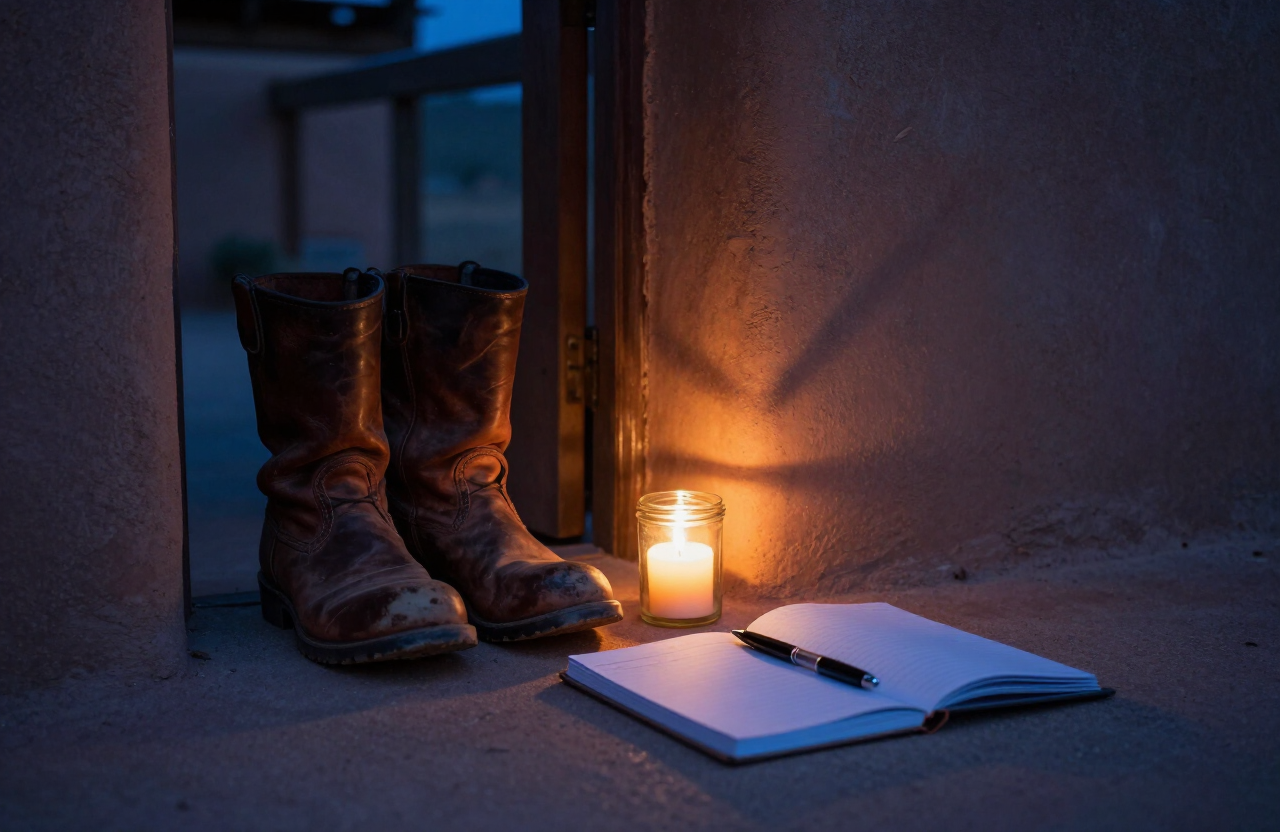
Cortisol peaks twenty to thirty minutes after waking. Rising before light lets that surge land in practice rather than dissipating into unconscious reactivity. The Essenes faced east and waited for first light — entrainment with the most powerful time-giver there is. The breath. Three to four rounds of cyclic breathing with retention — the protocol Kox and colleagues tested at Radboud and published in PNAS in 2014, where trained volunteers injected with bacterial endotoxin showed increased epinephrine, suppressed inflammatory response and fewer symptoms than untrained controls. Voluntary influence over the autonomic and immune systems, which had been thought impossible. We teach that protocol and take a reading while you do it. The cold, with a progression you can start tonight. Week one to two, thirty seconds at the end of your shower. Week three to four, one minute. Month two, two to three minutes. Month three, full immersion at ten to fifteen degrees. Colder is not better. Consistent is better. What it does: noradrenaline up two to three hundred percent, dopamine up around two hundred and fifty and staying up for hours, improved vagal tone and heart-rate variability, and mood effects reported in the research literature. What is actually being trained: the first seconds are shock and the mind screams to escape. That is the point. You are practicing not reacting to the autonomic alarm — staying present when every signal says leave. That is the foundation of everything else here, and cold water is the cheapest place to practice it.
Safety
Never do breath work in water, even shallow. Never while driving. Never standing where a fall could injure you. Contraindicated in pregnancy, uncontrolled epilepsy and severe cardiovascular disease. Anyone with a medical condition talks to their physician first — and to us, before booking.
The evening
Why the order is the order.
This is a safety point wearing an ordinary coat.
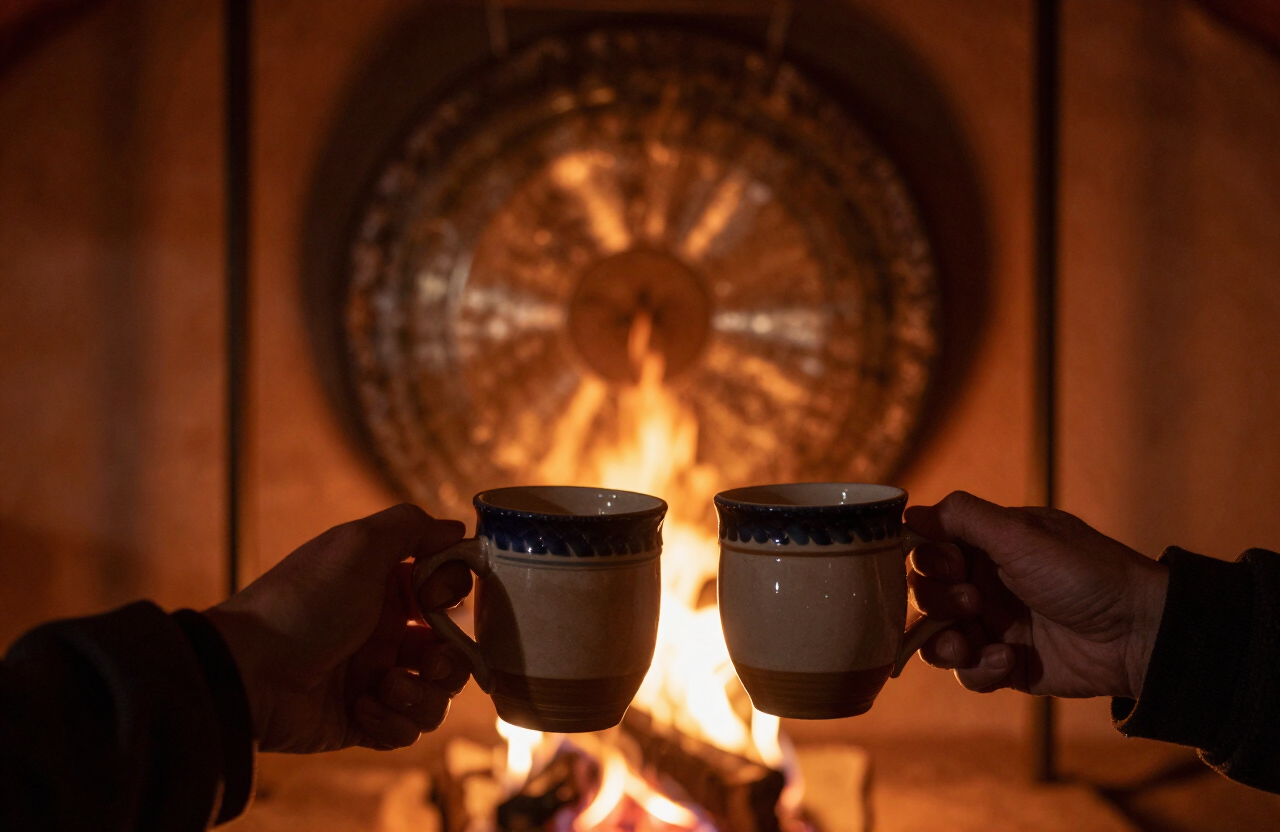
Morning works on the body and what it can be made to hold. Evening works on what arrives when you stop producing. Morning you generate; evening you receive. Same breath rate, entirely different job. It begins with a marker. The Essenes changed garments between the work and the evening practice — a physical signal that production is over. Here it is the river, or washing, or walking out to watch the light go. Something that tells the body this is different now. Then the review, and the framing matters more than the content. What served. What leaked. What is unresolved. Not judgment — inventory. The Essenes examined the day every evening and it was never guilt, it was data. You cannot improve what you do not measure, which is the sentence this whole place is built on, arriving from a completely different direction. Then sleep, treated as practice rather than the end of it. They counted evening as the beginning of the day. Consolidation, emotional processing and somatic integration all happen while you are asleep — the day's practice keeps running without you.
Why the order cannot be rearranged
Focused attention comes before open awareness — the mind needs an anchor before it can safely expand, and practitioners taught that way do better at the open practices than people who started there.
Heart coherence can be established in about sixty seconds and takes five to ten minutes to stabilize. Opening deep material before it is established risks flooding. That is why nothing difficult is scheduled early here and why the sitting always comes before the teaching.
Rushed endings measurably reduce what you keep. This is why the day closes with three numbers and a page rather than with the most interesting thing that happened.
On testimonials
There are none.
These are the first cohorts, so there is nobody to quote yet, and we are not going to invent anyone.
A stranger saying they felt better is weaker evidence than a number you watched change, and the number is the only one of the two we can hand you. Your own readings, twice, in your hand before you leave.
What we will not sell
No health claims of any kind. Nothing here treats, cures, prevents, or diagnoses. Nobody here is a clinician. If you have doctors, you keep them.
A flat week is information about your life, not about your practice.
What it costs
Three ways in
Nothing is paid until after we have talked. Room, meals, and every session are included in the price.
The weekend
$1,200
Long enough to find out whether you respond at all. Most people have never had that answered, and for many it is the only thing they came for.
Three days. Shared room in the house, two meals a day, every session included.
The intensive
Where most people land$3,600
Long enough to find out what your own difficult day looks like — the third one, usually — and to stop being twelve people and start being one. This is where the work does what the work does.
Ten days. Shared room in the house, two meals a day, every session included.
The forty days
$390
Long enough to find out whether it holds when nobody is watching and you are back in your own kitchen.
Remote. Available only after attending.
Nothing is paid until after we have talked. A deposit holds the place; the balance is due thirty days before arrival.
What happens after you leave
The practice was designed to run
without us.
The forty days
Five minutes a day for forty days beats sixty minutes for three, and the workbook is built for exactly that. Anyone who has done a weekend or an intensive can join a remote cohort: live sits twice a week, a shared room rather than a broadcast, and numbers submitted weekly — whether you practiced, not what you scored.
The group
The people you worked beside before dawn are the people still in the room afterward. That is not an add-on. It is the reason the work is in the week at all. You do not need a platform for it — a dozen people who have cleared an acequia together already know how to be in a room.
The honest part
Most people do not come back, and the practice still works — it was designed to run without us. Someone who does one weekend, takes the books home, and never speaks to us again has had the whole thing. That makes the people who do come back mean it.
The books
Included. Not an upsell.
Because the practice has to survive the drive home.
A week is a week. The books are what makes it possible to do this without ever coming back. Eighty-five thousand words, complete, free, no account and no email — because a place that puts the knowledge behind a gate is placing itself between you and the work.
Who this is
Jason Almasy
Thirty years of contemplative practice. Twenty-five building instruments. Monroe Institute trained. Darkfield microscopy on site.
Thirty years in contemplative practice, twenty-five at the bench — plasma tubes, high voltage, glasswork — and one buckyball that would not leave me alone. No institution to assign the blame to.

My own numbers
The same measurement. The same instruments.
You will get yours.
Collapsed
8 ms
It still happens, and it can hold for days. The floor protocol on the safety page exists for exactly this reading.
At rest
50–60 ms
The working baseline after eight weeks of practice. It began at 22.
Charged
137 ms
Same strap, same body, same ninety-dollar equipment anyone can buy.
It is one person, uncontrolled, and I would not accept it from somebody else as proof of anything. What it is, is the number moving, in the direction the equation predicts, measured on equipment anyone can buy for ninety dollars.
This is the same measurement, the same instruments, and the same three-column page. You will not get my numbers. You will get yours, and you will get to watch them.
Absolute baselines differ from person to person — age, fitness, medication, genetics — so compare your numbers only to your own trajectory.
The fourth instrument
The EEG.
At minimum twelve simultaneous recordings. Twice a day. Cohort after cohort.
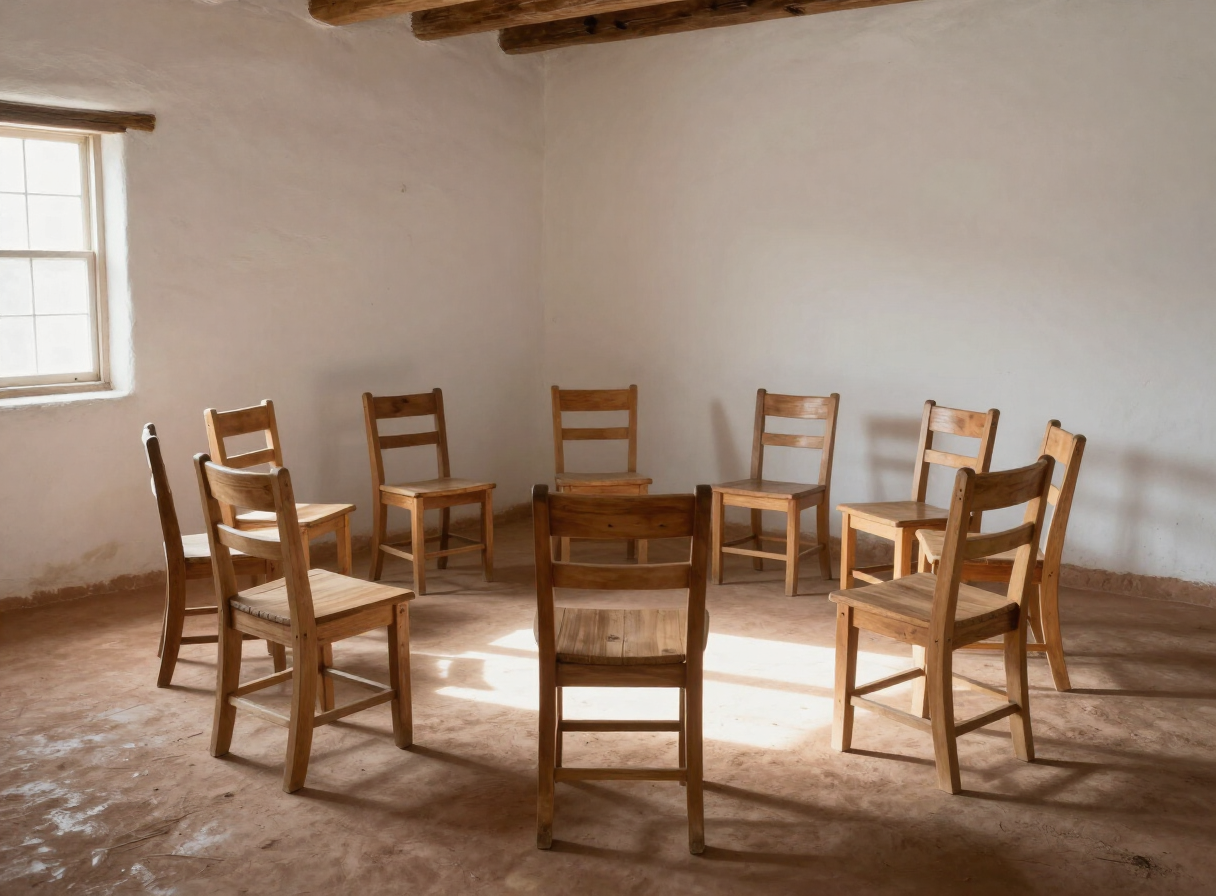
Twelve people becoming one thing. You can watch it happen on a screen in real time while it happens in the room. That is what this instrument is for, and nothing else here can show you that.
Everyone wears an EEG headset. At minimum twelve people, at minimum twelve recordings, running at the same time, in the same room, through the same sitting. Not a subset. Not a demonstration. Everyone. A chest strap tells you what your own nervous system is doing — it cannot say anything about the person beside you. Heart-rate variability is a solo measurement. The EEG is different.
EEG is almost always recorded one person at a time, in a laboratory, wearing equipment that costs more than a car. Here it runs on twelve people simultaneously, twice a day, for a week. The recordings are consumer-grade and noisy. What they can show that a single recording cannot is whether two nervous systems in the same room start to correspond, and whether that correspondence grows over days.
Twelve people make sixty-six pairs. Every one of those pairs either shows correspondence rising across a session or it does not. That is the claim, and the EEG is what tests it.
Twelve people, twelve recordings, at the same time in the same room. What we are looking for is specific. The frequencies sit on a ladder in golden-ratio steps, with coupling on the rungs and nothing between them. From the Earth’s own cavity frequency the rungs fall at 20.5 and 33.2 cycles per second — stronger than the standard bands most EEG work reports. That is not a shape we went looking for in the brain. The classical EEG bands were already described as a geometric series stepping by 1.618 — Pletzer, Kerschbaum and Klimesch, Brain Research, 2010 — and the golden arrangement of the resting brain has been worked on steadily since by Klimesch and others, with a multi-dataset validation published this year. That work is not ours and it was not done with any of this in mind. What we add is why, and how hard it should get. The strength should rise as the square of coherence rather than in proportion to it. That squared form comes out of the equation’s own structure. What is posited, and named as a posit rather than buried, is that a chest strap’s RMSSD stands in fairly for coherence — and that posit has its own falsifier, on the same equipment, in the same room. So the test has three ways to fail and we will report any of them. If the peaks are not on the rungs, it fails. If they are on the rungs but scale in proportion rather than as the square, it fails. If someone at ordinary baseline shows the same peak as someone thirty years in, it fails. Your recordings are yours. What they contribute is one more point in the only dataset being gathered on this at the coherent end of the range.
How it runs
Twelve people wearing consumer headsets together, twice a day, for a week, cohort after cohort. It requires twelve people in the same room and the equipment running at the same time.
We do not use the phrase “brainwave entrainment”. Anyone who does should be asked what precisely they measured, on how many people, with what controls.
What guests receive
Their own traces, alongside everyone else’s, at the end of the week. Not an interpretation of the traces — the recordings. The signal is noisy because the equipment is consumer-grade. Nothing here is medical and nothing diagnoses anything.
The comparison
The strap tells you about you. The EEG tells you about the room.
What you leave with
Everyone leaves able to keep measuring.
A chest strap for the heart, a headband that reads four channels of EEG, and the app that turns both into the three numbers you have written by hand all week. On the ten days it is included; on the weekend it is two hundred and five dollars, which is what it costs us. That is the part that makes this different from a week away. You do not go home with a feeling that fades on the drive. You go home with the instruments, and the same hour, and eleven other people doing it at the same time in eleven other rooms. Whether two nervous systems still correspond at a thousand miles is a real question with a real answer, and nobody has run it with the state of the person recorded at both ends.
Once during the week
The water session
Water takes the shape of what was held over it. That is the claim, and here it runs as a finding-out: you hold a vessel through a sitting, nobody knows which condition they held, the crystals are photographed numbered and unlabeled, and the room looks together before the assignment is revealed. Emoto photographed this for thirty years and Austin for a decade — neither blind, crystals chosen by eye, and that objection is exactly what the sealed card answers. If the crystals do not differ, you will see that too. This house does not pre-write the morning.
How we check it
Everyone holds a vessel of water through a sitting. Held with intention toward order, or toward disorder — and some vessels held by nobody at all, so the difference can be seen. Nobody knows which they have; each person draws a sealed card, reads it, and says nothing.
The water freezes overnight. In the morning the crystals go under the microscope and onto a screen, and the room looks at them together.
What makes ours different
The Princeton PEAR lab ran twenty-eight years of intention experiments and logged the machine every time. They logged who the operator was, and they found operator-specific structure in the data. What they never logged was the state of the operator’s body while it was happening — not once, in twenty-eight years. So their own data cannot say whether the state of the person mattered, because that is the one thing they did not measure.
We measure both. A heart-rate reading runs through every hold. The crystal is a fine measurement of what the water did. The reading is a measurement of what you did. Nobody has ever put those two numbers side by side, and by the end of the week you will have your own pair.
What we call solid is coherence that has not finished.
The water takes the shape of what was held over it. That is the claim. For one night, you are the one holding it.
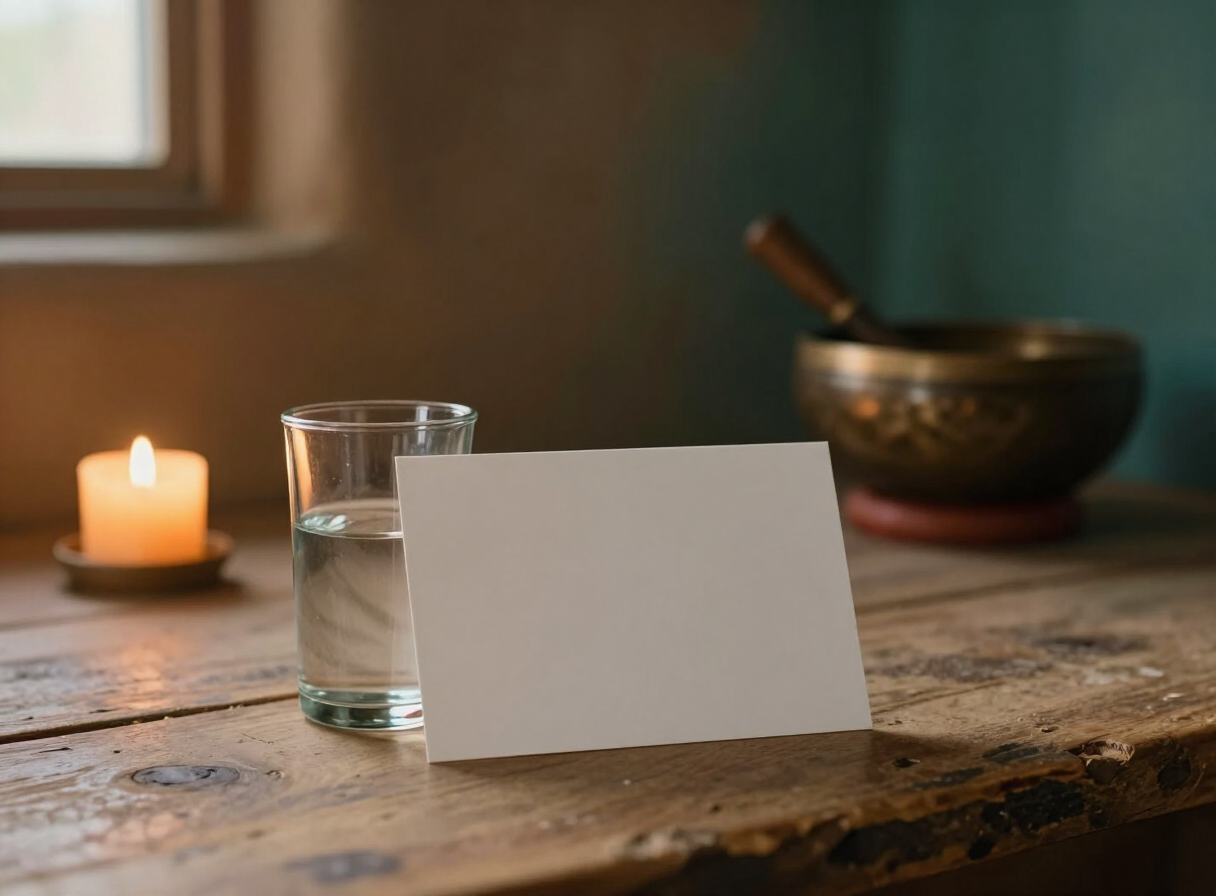
How it runs
- 01Sealed card drawn. Nobody knows which condition they hold.
- 02Heart-rate reading runs through the full sitting.
- 03Water frozen overnight. Crystals photographed at dawn, numbered, unlabeled.
- 04The room looks at them together. Assignment revealed after.
- 05Your crystal. Your reading. Your pair of numbers. Yours to keep.
What this is trying to become
A practice that produces measurements,
and an argument that can be disproved.
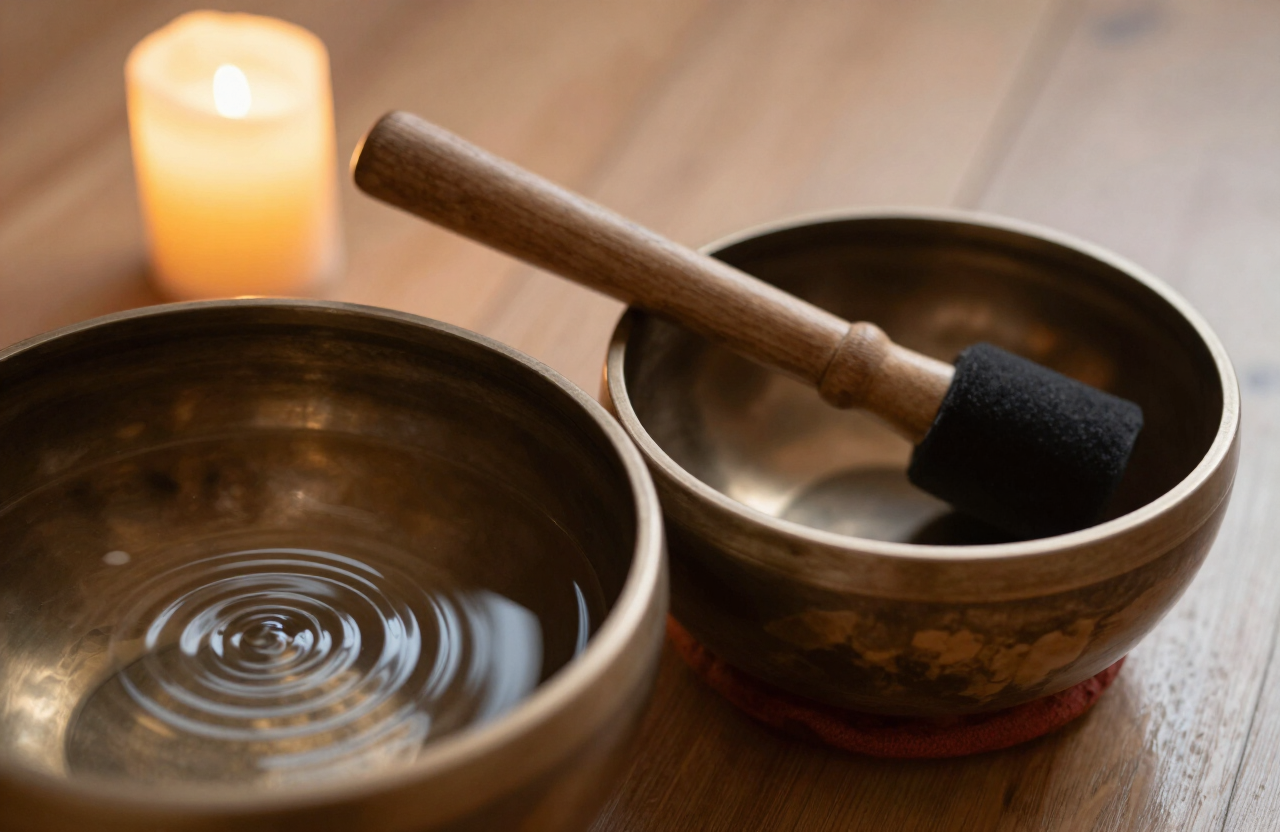
Twelve people wearing sensors together, twice a day, for a week, and then another twelve, and another. The readings belong to whoever produced them. A copy with the names removed becomes part of a record we are building about what happens at the coherent end of ordinary human experience.
None of that is a revival. A revival is where it happens.
Cohorts become a network. The network becomes a dataset. The dataset either supports the claim or kills it, and both of those are results we would publish. People who have done the week and the forty days teach it, because that is how anything survives its founder. The books are already free and will stay free.
No certification anyone can buy. No levels, no titles, no inner circle, nothing to ascend. The three tiers are about time, not rank — a person who has done forty days has done forty days, and that is the whole of what it means.
There is no wall of testimonials because there are no testimonials yet. There is no established method because the people in the first rooms are the ones who will establish it. That is a real thing to offer and we are not going to pretend it is a limitation. You would not be attending something. You would be at the start of it.
Most of what is here will be built by people who have not arrived yet. Some of them are reading this.
This is not a place selling rest, or transformation, or secrets. It is a place that will meet you where you are, measure you, work you, teach you, feed you simple food, and hand you the numbers — and tell you honestly if nothing moved.
Twelve at minimum, every month.
You do not need us to begin — start with five minutes tomorrow morning. If the page starts to interest you, write to us about the next cohort.
You read at the top that this is not a retreat. Here is what that meant.
A retreat takes you out and returns you unchanged with a good feeling that fades on the drive. A revival brings something back to life, and you will have the number that says whether it happened.
Rise before dawn. Work beside eleven other people. Get in the river. Take the readings. Then decide what you know.
Questions
Is this a meditation retreat?
No. A retreat takes you out; whether anything changed stays a feeling. Here the change is measured — chest strap, EEG headband, darkfield — before and after, and you keep the readings.
What does a ten-day meditation retreat cost?
Three days from $1,200, ten days from $3,600. Room, meals and every session included, and nothing is paid until after we have talked.
Do I need meditation experience?
No, but this suits people who already have a practice that has stopped moving. People who have meditated for years and people who have never sat still for ten minutes attend the same cohort.
How many people are here?
Twelve at minimum. The number is not a preference — coupling sums over pairs, so twelve people make sixty-six. Below twelve the room does not work properly.